Fuel and venting compatibility
Gas units need the right venting method for the home and appliance. The contractor will identify whether the setup is atmospheric draft, direct vent, or power vent, and what can be reused safely.
Serving Milwaukee, Wisconsin & surrounding areas
Calls answered around the clock
Heater replacement · Milwaukee
Describe what's going on once and get connected with a local contractor who replaces water heaters in the Milwaukee area.
CALL NOW: (414) 310-6351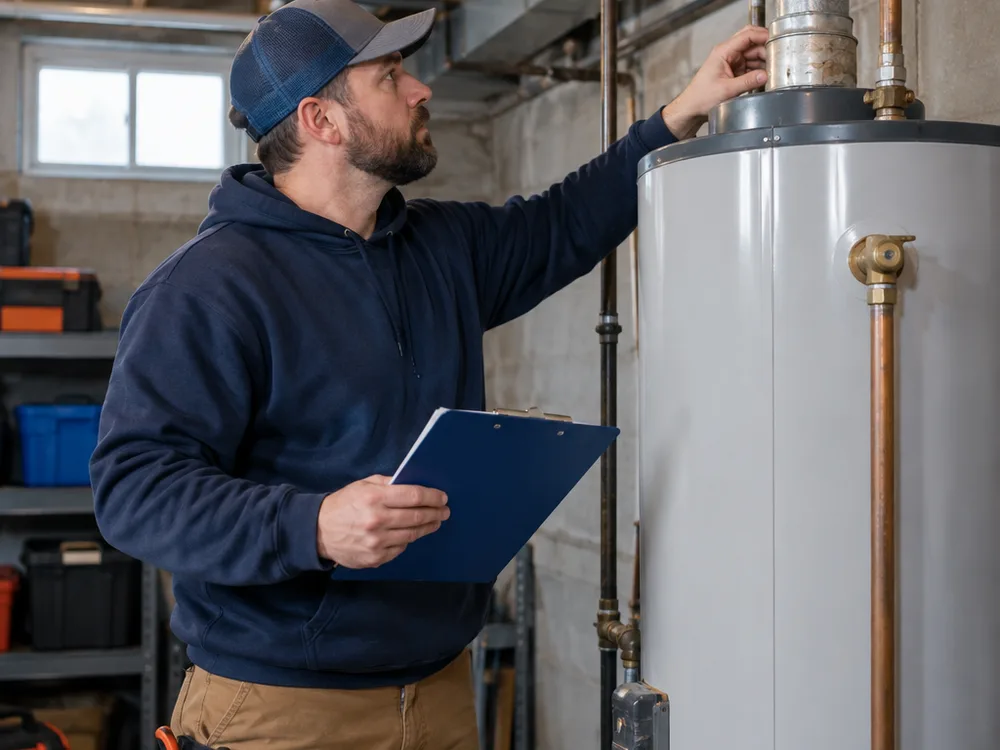
If you're searching for water heater replacement Milwaukee homeowners can trust for steady hot water, you're usually dealing with one of three situations: an aging tank that's nearing the end of its life, a leak that makes replacement the safer call, or an upgrade—such as a bigger household, remodel, or switching fuel or venting.
A replacement is more than swapping a box. The contractor typically has to confirm the fuel type—gas or electric—the venting style if it's gas, the tank size or tankless capacity, and whether the existing shutoffs and piping are in good shape. If you're starting from scratch instead, our water heater installation in Milwaukee page covers the process from sizing to final inspection.
Common reasons homeowners end up replacing instead of repairing — and if a fix is still possible, water heater repair in Milwaukee may be the lower-cost route:
If you're leaning toward a modern on-demand system instead of another tank, our tankless water heater repair in Milwaukee page explains how these units are serviced and when they make sense.
A good replacement conversation starts with details that narrow the options: your current unit's fuel, vent type, and approximate age; whether you have a recirculation line; and how many bathrooms or back-to-back showers you're trying to support. Milwaukee Water Heater Repair takes those basics and connects you with a local contractor who handles water heater replacement.
Replacement planning
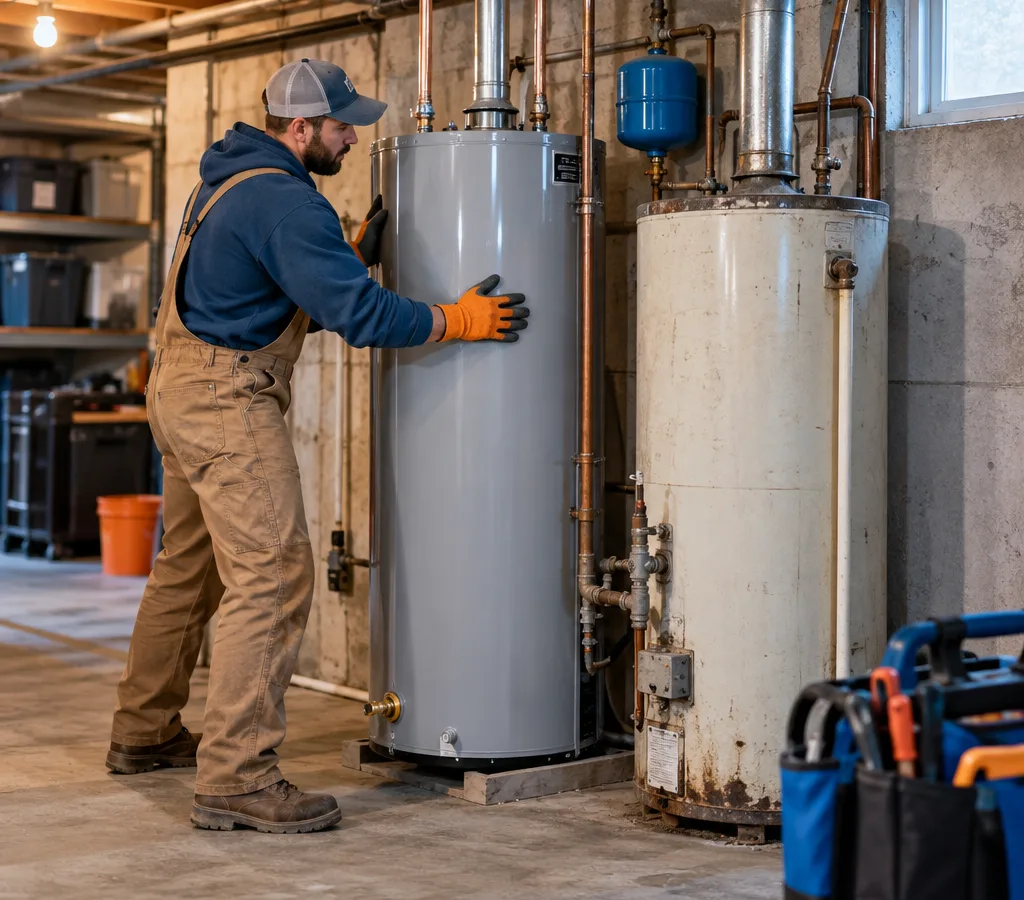
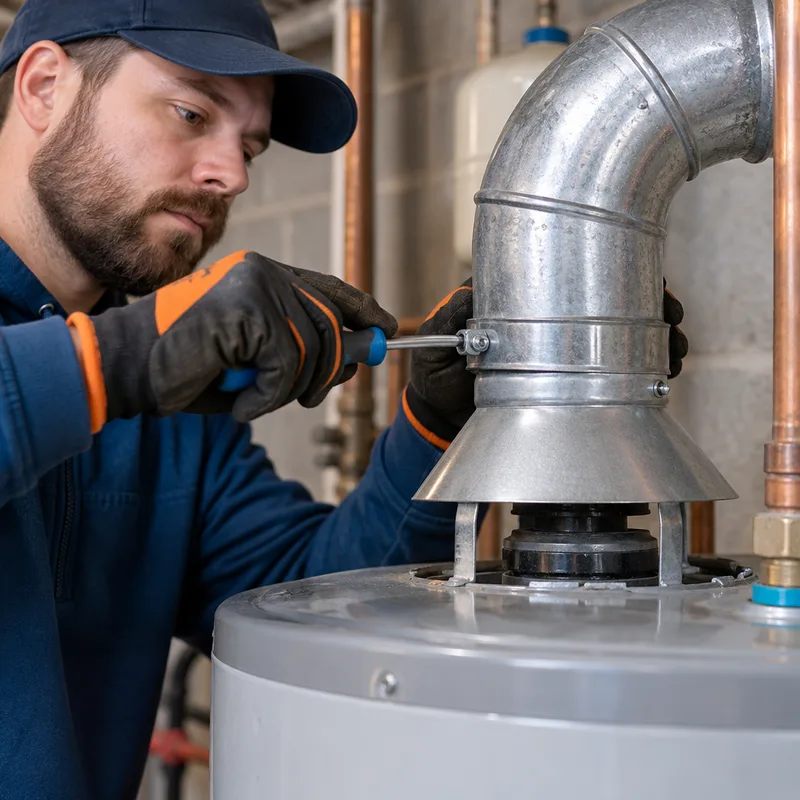
Gas units need the right venting method for the home and appliance. The contractor will identify whether the setup is atmospheric draft, direct vent, or power vent, and what can be reused safely.
Expect questions about household size, peak hot water times, and fixtures. The goal is choosing a tank size or tankless output that matches how you actually use hot water.
Old shutoffs, corroded connections, or missing service valves can complicate a swap. The contractor will look at the cold inlet, hot outlet, and whether the piping needs updates at the heater.
Safe combustion and proper draft matter. The installer will look at where air comes from, how the flue is routed, and whether the current setup is appropriate for the replacement model.
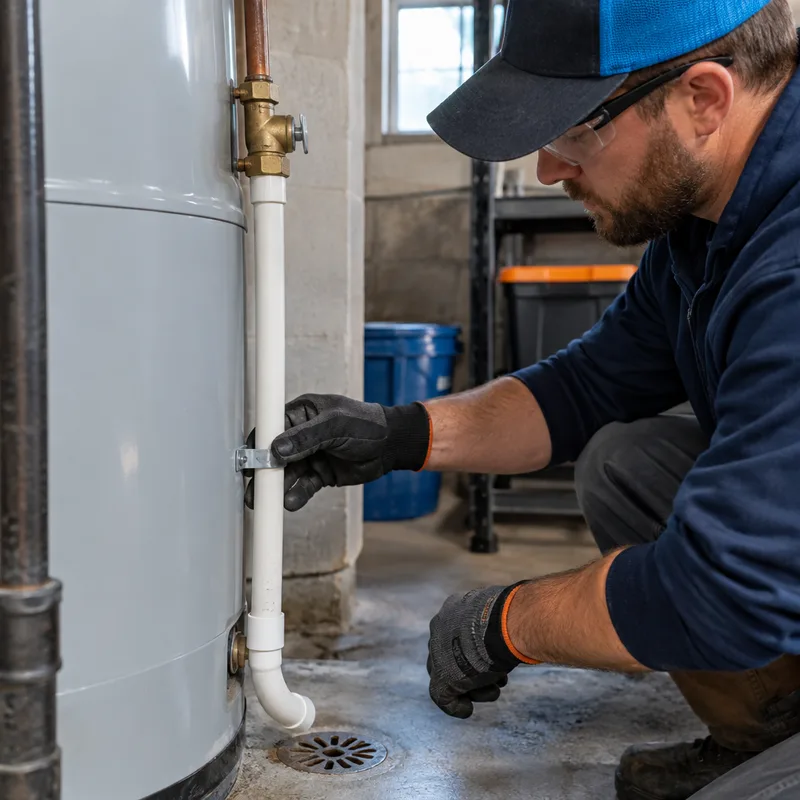
Basement floor drains, sump pits, and hose routing affect how the old unit is drained and removed, and how the new one is set for maintenance.
Five clear steps
You'll be asked what fuel it uses, whether it's tank or tankless, where it's located—often a basement or utility room—and what symptoms led you to replacement.
We connect you with an independent contractor in the Milwaukee area who handles water heater replacement and can talk through options for your setup.
The contractor checks venting, clearances, connections, and code-related items such as the temperature and pressure relief valve discharge line and expansion tank needs.
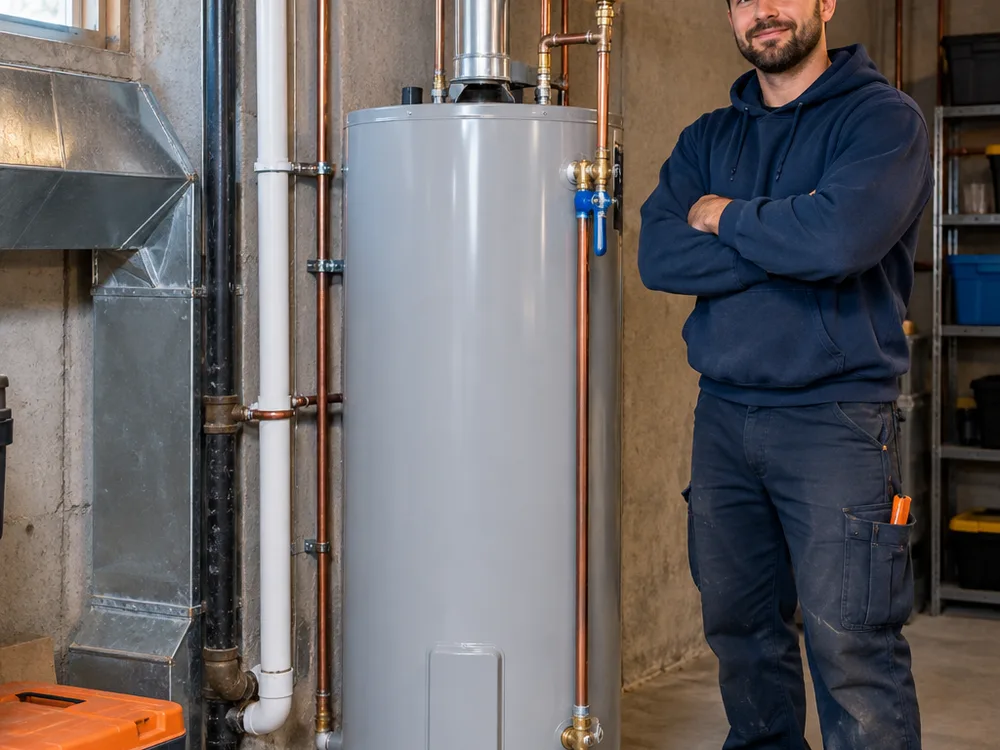
The old tank is drained and disconnected, the new unit is set, water and fuel or electrical connections are made, and venting for gas units is completed according to the manufacturer's requirements.
The contractor fills and purges the tank, checks for leaks, confirms proper burner operation or electrical function, verifies draft on gas units, and adjusts temperature settings.
If your tank is leaking, rusty, or running out of hot water early, a replacement is usually a straightforward decision once the venting and sizing are confirmed. Describe what you're seeing once and we'll connect you with a local contractor who can take it from there.
CALL NOW: (414) 310-6351Connections, venting, and safety details
Questions before replacement
If the tank itself is leaking, replacement is typically the practical next step because the tank body is not a serviceable part. A contractor can also help you weigh replacement when an older unit has repeated burner, thermostat, or ignition issues and the overall condition is deteriorating.
Have the fuel type, whether it's a tank or tankless unit, the approximate age, and any symptoms such as leaking, no hot water, rumbling, or rusty hot water. If you can read the capacity and model information from the label, that helps the contractor narrow options faster.
It depends on gas supply sizing, venting route, condensate handling for many high-efficiency models, and where the unit can be mounted. The contractor can examine the existing mechanical area and explain what changes a tankless conversion would need.
Not always. Some replacements are like-for-like, but venting can change if the new unit is a different efficiency category or vent type, such as power vent instead of chimney draft. This affects both unit choice and installation scope.
In most replacements, the old unit is drained, disconnected, and removed from the home by the contractor as part of the job. If basement stairs, tight turns, or narrow doorways are involved, the contractor may plan the removal method in advance to avoid damage.
Clear a path to the heater and make sure the area around it is accessible, including nearby shutoff valves and electrical panel access if it's an electric unit. If the heater is near stored items in a basement utility area, moving them back a few feet helps the contractor work safely.
Yes. Tell us what you're seeing and what kind of unit you have, and we'll connect you with a local contractor who can evaluate whether replacement is the right call for your situation.
Replacement is the right fit when the tank has failed or when upgrading makes more sense than chasing repeated issues. If you suspect it may be repairable, start by explaining the symptoms when you call.
Describe your current unit and the problem once, and Milwaukee Water Heater Repair will connect you with a local contractor who handles water heater replacement in the Milwaukee area. You'll speak with the contractor directly, get your options, and decide what to do next.